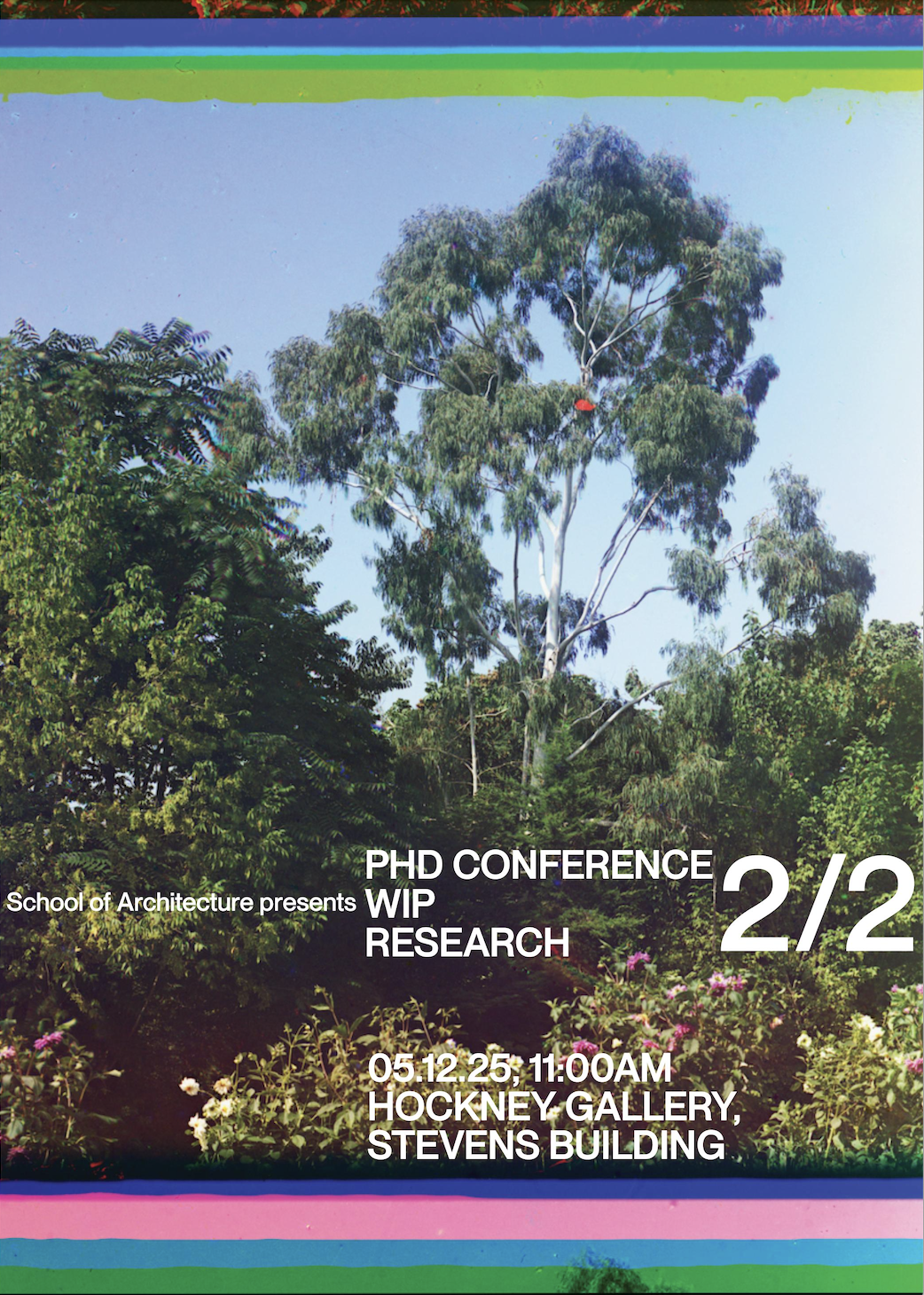
This series brings together guest speakers, RCA research staff and PhD students to present their work and research in progress. These events are open to all students and researchers at the RCA. Guests and candidates interested in the PhD Programme are warmly invited to join. For details or questions please contact Ines Weizman, Head of the Architecture PhD Programme.
The conferences will take place in the Hockney Gallery, Stevens Building on Kensington Campus.
Invited critics will be Ellis Woodman - Director of Architecture Foundation and Guillermo S. Arsuaga - Architect and Researcher at Princeton University as well as RCA research staff and supervisors.

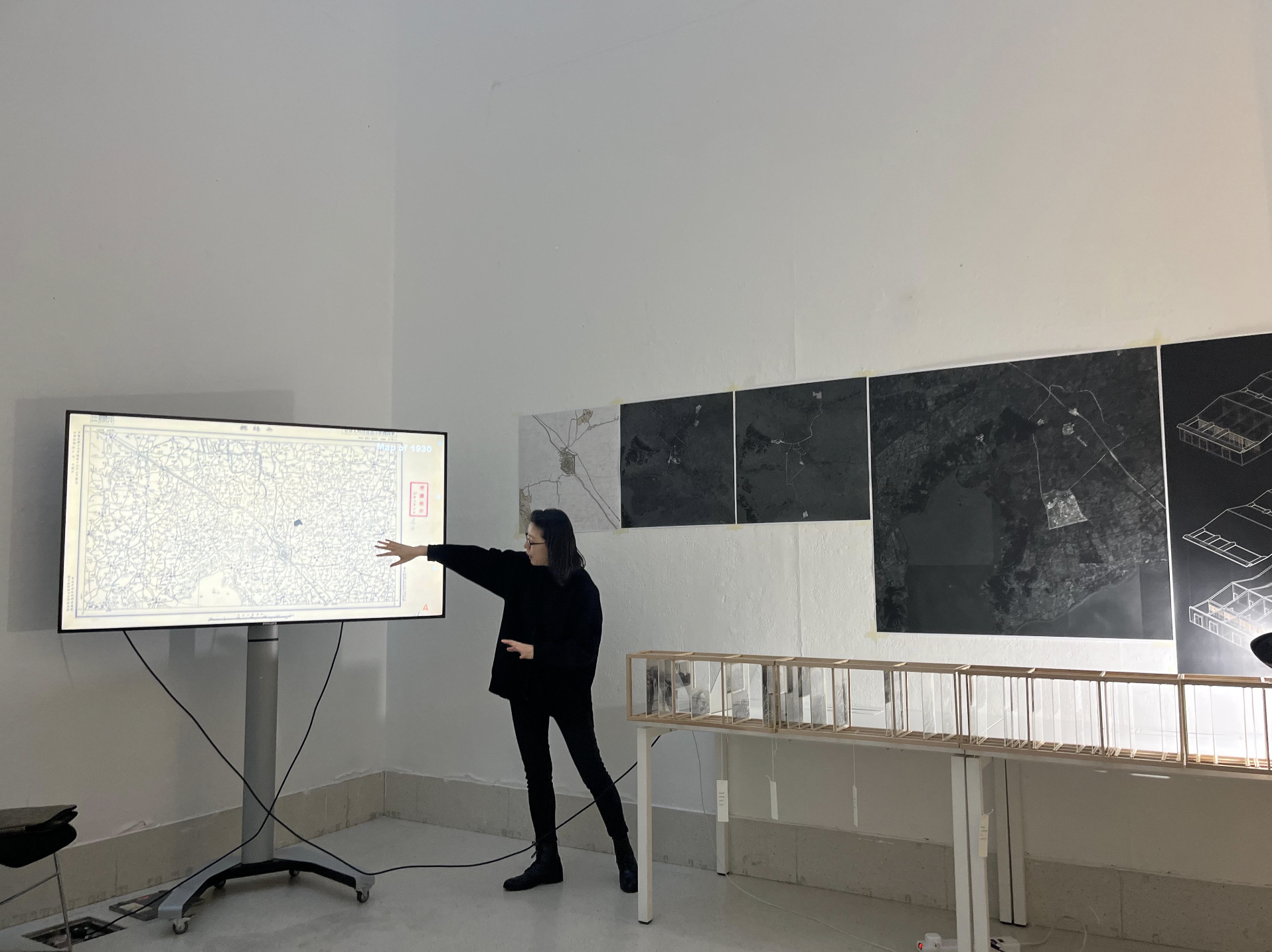
During the Tomb Sweeping Day in 2023, my family and I revisited the old house in the countryside of Wuxi, where my mother’s ancestors had all lived. By April 2023, the entire village had been razed to the ground, leaving only a few remaining ruins awaiting their final demolition. In fact, this marked the tail end of Wuxi’s latest wave of urbanization. Over the past two decades, most of the city’s villages and farmland have been converted into an urban environment. The built-up area of Wuxi expanded from 100 square kilometers in 2000 to 587 square kilometers by 2025, while the urbanization rate rose from 58% to nearly 90%. This reshaping of the city is not only evident geographically, but also permeates psychological, social, and cultural dimensions. This paper traces the evolution of Wuxi – a city in China’s Jiangnan region – alongside its underlying national and societal transformations through a family’s century-spanning history. As the initiation of the project, this presentation focuses on the research into the city both spatially and temporally revealed through the family’s residences and life transformation. Collected archives, texts and personal interpretations of the city, which are presented, may eventually form a film script.

Focusing on the Northwest Iberian Peninsula, specifically Portugal's Minho Region, this research investigates how ancestral knowledge, mythological narratives and symbolic landscapes can inform new political, social and ecological models of repair, and coexistence. It departs from the premise that dominant ecological discourses and production of ecological knowledge remain shaped by dualistic, mechanistic and extractivist paradigms that marginalize alternative ways of knowing and being in the world.
By engaging with the mythological, oral traditions and earth-based practices, this study aims to reveal the indigenous landscape of this - Old Europe - territory, and how these cosmologies generate spatial imaginaries and relational systems of place-making grounded in care, reciprocity, and new [old] ways of being in the world. It critically revisits ethnographic and archival material of modernity produced under Western positivist frameworks, which historically classified earth based knowledge as superstitious, irrational and primitive. Instead, the research foregrounds their ecological intelligence and cultural significance.

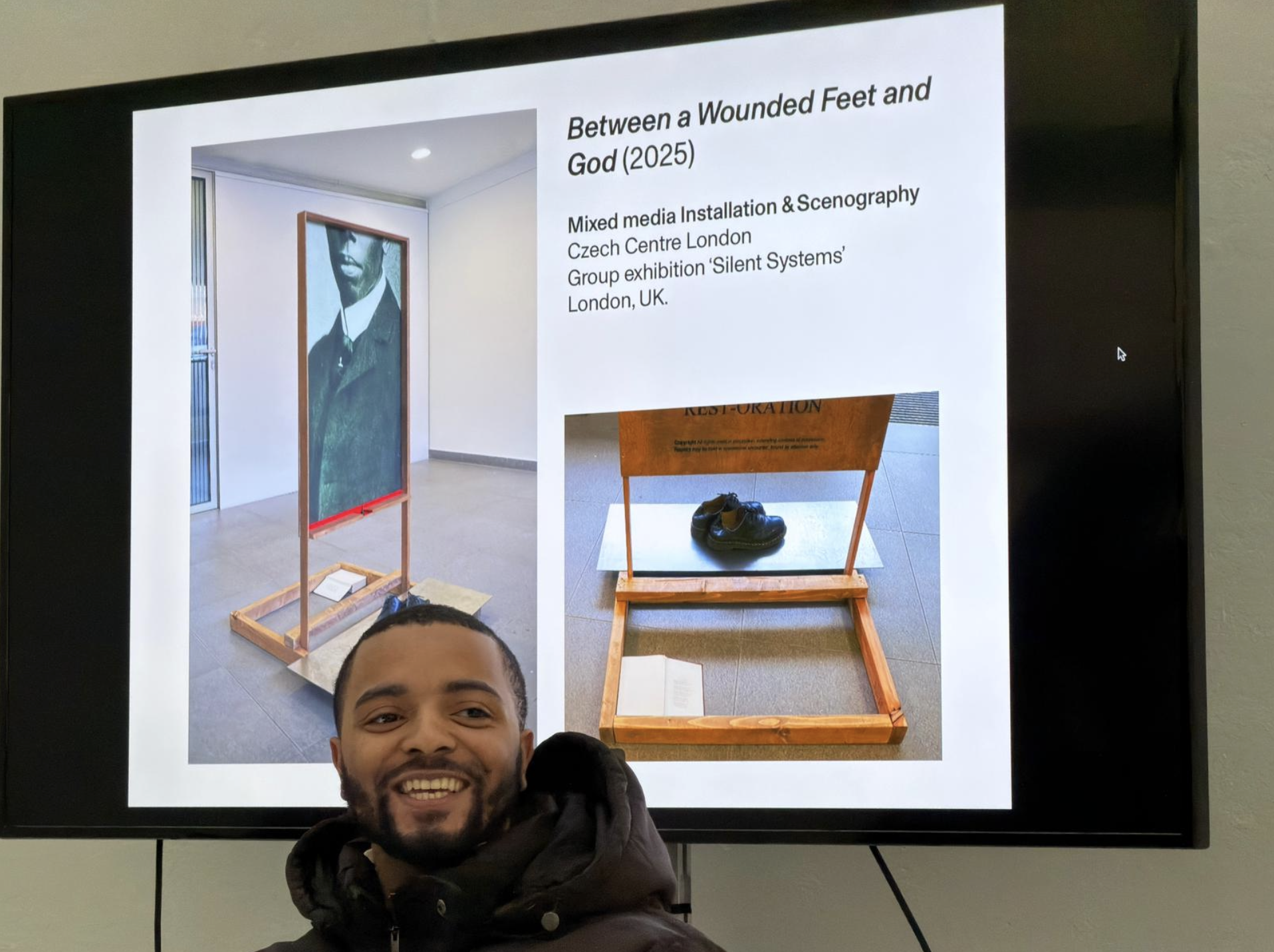
This research project investigates how movement, gesture, and situated speech generate alternative readings of institutional space. Drawing on a walk conducted in Portuguese inside the Royal Albert Hall, I treat the body as an instrument of inquiry, noticing how corridors, staircases, and resonant thresholds carry memory and shape perception through the interplay of memory, presence, and architecture.
Working with the audio recording of this walk, the narration is analysed as a gestural event, in which articulation, pauses, and shifting modes of listening structure the encounter within one of Britain’s most recognisable cultural landmarks for live performance and public ceremony.
The project reworks an anticolonial tactic to probe the politics of language, spatial embodiment, and the audible traces of power, foregrounding minor gestures (such as walking) as a method for reading space through corporeal and acoustic attunement. It considers how spatialised memory circulates through everyday actions and how institutional architectures choreograph relationality. The combination of recorded audio and live analytical narration creates an immersive research encounter, showing how archives and histories can be activated performatively and how institutional spaces can be re-read through embodied inquiry and anticolonial critique.

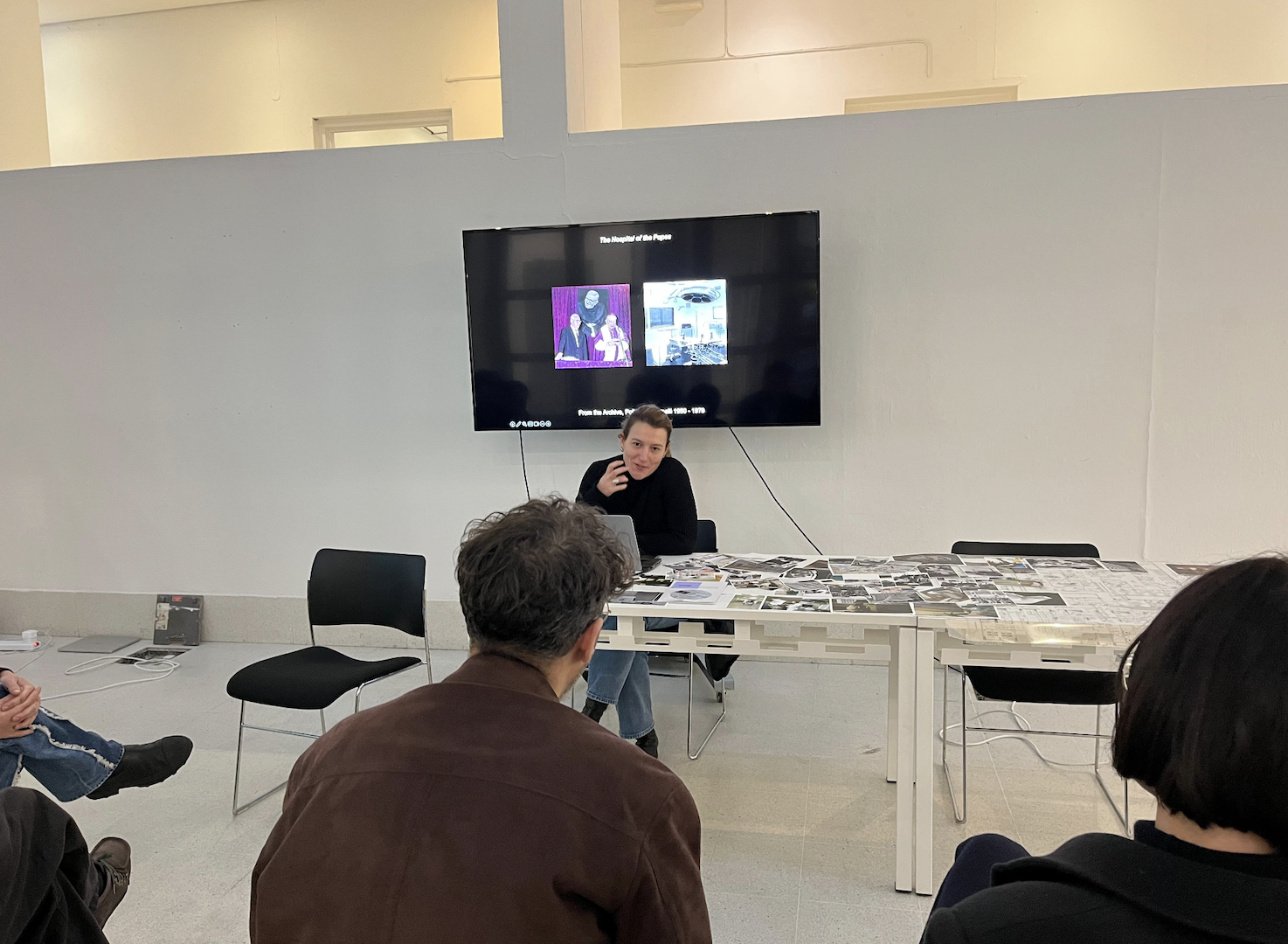
This research approaches the hospital as an image-making organism, a place where illness becomes visible through architectures of observation. At the Policlinico Universitario Agostino Gemelli—the Catholic institution in Rome where Popes have been treated since 1964—medical care unfolds within a system of imagination and imaging. Architectural plans reveal spaces of both transparency and obscurity, transcendence and gloom. Bunkers, sealed doors, lead-lined windows, and machines that look into bodies coexist with shrines, crosses, candle scents, and other religious paraphernalia.
Tracing the hospital’s history from its religious foundations to the contemporary experimental department, the study argues that medical images are not objective representations but operative acts that reorganise space, labour, and clinical knowledge. They mediate between the fragility of the sick body and the abstract taxonomies of pathology, continually negotiating exposure and protection, presence and absence.
By scaling architectural observation from the single medical image to the radiology and radiotherapy department—and ultimately to the hospital as an institution—this research examines how knowledge becomes a spatial complex (which in turn can be examined with regards to epistemological systems the created its very architecture). The paper will outline the interrelation between the spatialisation of knowledge and the evolution of body visualisation, with particular attention to contemporary healthcare environments. To do so, it will focus on architectural drawings and the correlated images produced within the radiology and radiotherapy department at the Gemelli.

On 4th or 12th April 1945, an aerial reconnaissance unit of the US Air Force crossed southern Styria. Amongst the shots taken that day is the currently only known complete aerial photograph of the concentration camp site that was part of the Mauthausen sub camp Graz-Leibnitz. The sub camp stretched through Aflenz an der Sulm, a small rural town towards the southern Austrian border with Slovenia. It consisted of two main sites set one kilometre apart: the concentration camp, and the so-called “civilian labour camp”. The sub camp operated an underground production facility in an extensive quarry between those sites. This paper focuses on the concentration camp site, while the thesis explores the whole sub camp area.
In 2024, in the framework of the memorial project titled “Aflenz Memorial in Becoming”, an archaeological excavation of the concentration camp site was undertaken. The photograph became an important reference for geolocating potential physical remains of the camp, which had disappeared from visual memory under an agricultural field. The excavation revealed evidence to the existence of the camp and its architectural elements - from watch tower foundations, to wooden stilts of the barracks, brick walls, and sewage systems. After documenting the site through photographs, video material, and maps, the field was closed again.
This paper attempts to contextualise the photograph. It explores the roles of its creation, disappearance, and reappearance across multiple historical and material layers of the site, which have so far received limited research. The image evoked a spatial memory, while the excavation temporarily exposed the physical reality it indexed. The cycle of uncovering and re-covering draws attention to the inherent instability of such memory in landscapes shaped by erasure, agricultural use, and political silence. It raises important questions about the ethics of revealing versus concealing physical traces of violence, particularly in rural settings where everyday land use may obscure or overwrite historical trauma. Memorial projects such as the “Aflenz Memorial in Becoming” (or another project such as the “Wächterhaus” from 2009), therefore, operate within a dynamic negotiation between surface and subsurface, presence and absence, image and ground. Together, these processes demonstrate how landscape, documentation, and cultural memory intersect in the ongoing effort to understand and commemorate the histories embedded within the soil of Aflenz.

This presentation examines the photographic work of photographers employed by the United States Army forces to document the eastward advancement of military troops in the final months of the Second World War and Germany’s surrender in 1945. Thousands of soldiers still lost their lives in the last weeks of the conflict. Although the region was occupied almost entirely by United States Army forces—with only a small southwestern area administered by France—it quickly became a site of intensified scrutiny. Military authorities sought both to dismantle the remnants of German resistance and to liberate prisoners held in concentration camps and prisons. Simultaneously, cultural officials and observers attempted to understand the ideological conditions that had enabled widespread adherence to National Socialist propaganda.
Against this backdrop, photographers and writers documenting the Allied advance produced a visual and textual record that oscillated between the persistence of idyllic, folkloric imagery—long associated with Bavaria’s rural identity—and the stark realities of a region implicated in the cultural imaginary and political origins of National Socialism. As an initial point of inquiry, this study turns to the photographs and dispatches of Lee Miller, the American artist and Vogue correspondent who accompanied Allied troops through Germany in the final year of the war. Her work, shaped by a surrealist sensibility, captures both the landscapes and settlements of a region often mythologized as the “land of fairytales” and the traumatic evidence of wartime atrocity. Miller’s photographs contribute to a visual psychogram of the German population that addressed contemporary international audiences while speaking to historical memory, culminating in her emblematic image of herself in Hitler’s bathtub in Munich.
The Programme's Elevator Pitch!
Please view the programme's elevator pitch for an overview.
General Information
Please find information on the programme curriculum, application rounds and fees.
Apply
Please consult the Royal College of Art's application portal:
Postgraduate Research (PGR) Programme