





Students

  1. About
  2. Students
  3. Events
  4. Research Themes
  5. Conferences
  6. Staff
  7. Guests
  8. News
  1. About
  2. Students
  3. Events
  4. Research Themes
  5. Conferences
  6. Staff
  7. Guests
  8. News
Sam Joseph

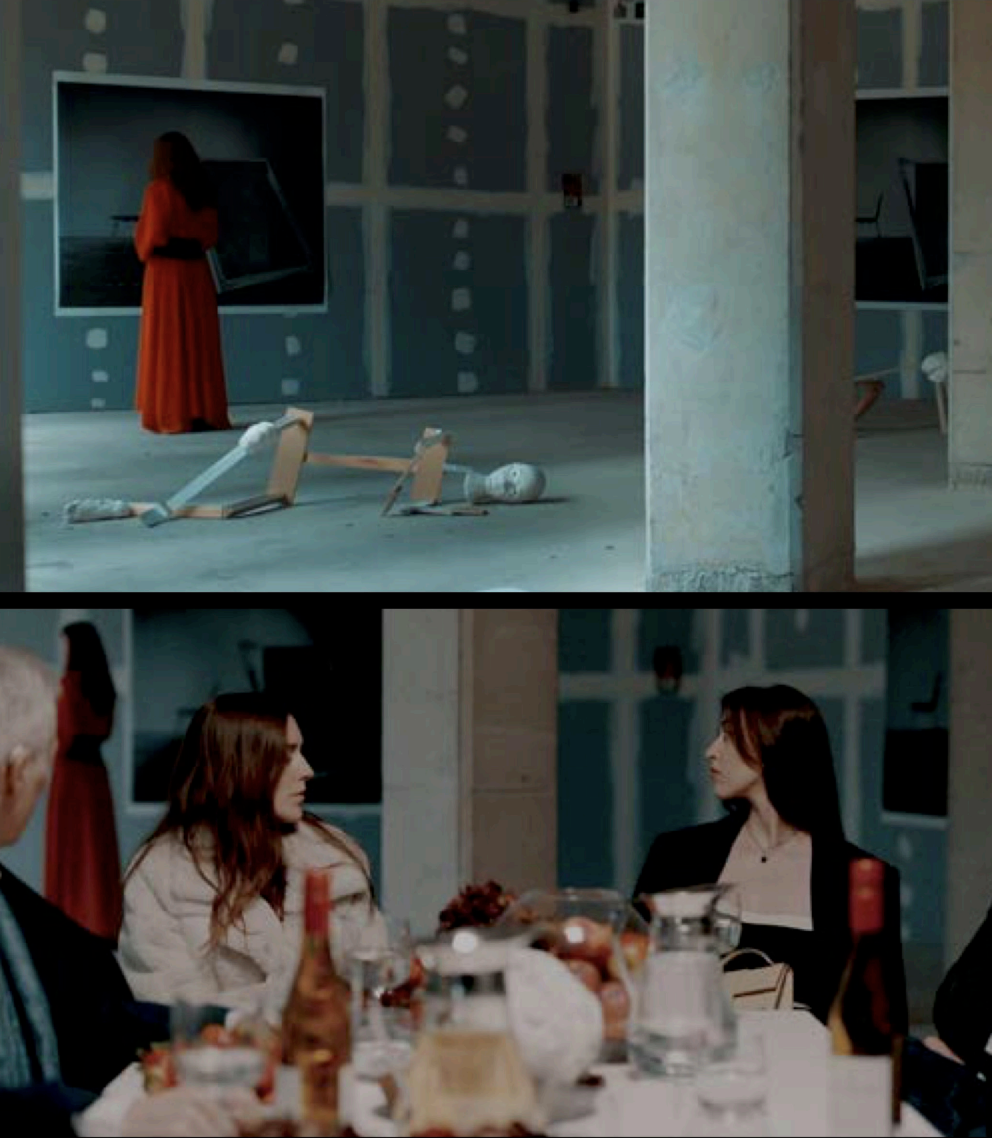
Dismantling the Frame

Audience, Space, and the Feminist Reconfiguration of Cinematic Violence Through Filmmaking and Installation/Exhibition Practices.
Cláudia Da Palma Romão

Cartographies of Myth

From Ancient Devices To Care and Repair
Marino Amodio (Visiting Researcher 2025/26)

Show and Tell

Architecture as a Preverbal Form of Communication
Antonio del Giudice

The Politics of Waste Dumping

In the Campania region, Italy.
Catherine Ince

Eames Ecology

An environmental history reading of the Eames Office
Nothando Lunga

Decolonial Praxis and The Question of Land Reform

In KwaZulu-Natal, South Africa, 1843-Present
Yanqi Huang

Pedagogies, Professionalism and Practice

Architectural Education at the Royal College of Art 1951–c. 1999
Christoph Lenhart

Bavaria Marvelosa

Tradition, Tech, Trash and Tales
Mengcen Shen

THE SHAPE OF MEMORY

FAMILY TREES IN ARCHITECTURE
Jason Bill

Social Idealism

The work of Bauhaus Architect Max Bill
Daryan Knoblauch

INTIMATE VASCULARITY

Penetrating the Infrastructures of Self Design
León Duval

Politics of Bodies in the Atacama Desert

The migratory routes between Colchane and Iquique
Jonathan Lettmann

The Aesthetics of Arctic Expeditions

Büşra Dilaveroğlu (Visiting Researcher 2023/24)

Architecture of Forgetting

The Presidential Symphony Orchestra Building in Istanbul
Marisa Musing

From Frescoes to Cyberfeminism

Henrique J. Paris

Archive Choreography

Enacting Transatlantic Material and Audiovisual Cultures
Rebecca Alice Crabtree

West Yorkshire Without Wool

The Impact of the Wool Industry on the region’s Sense of Place
Shehrazade Mahassini

TAMING WATER AND DESERT

The Colonialities of Water Extraction in Northeastern Libya
Tiago Patatas

In Plural

Tactical Solidarities Across Lithium Extractive Frontiers
Marina Addis Waldmann

Carescapes

Architecture against loss
Dalia Amellal

Military mock-cities

The simulated reality of West Asia
Marco Sosa

Architecture in Abu Dhabi

during the 1970's and 80's
Dámaso Randulfe

OUT OF THE DEEP

Legacies of Violence and the Publics to Come
Mingxin Li

Changing Coexistence on the Zoige Plateau

Infrastructure construction and livestock industry and its impact on indigenous land in Tibet
Laura Barlow

Futuristic, Interdisciplinary Aesthetics and Architecture

in the Work of Saloua Raouda Choucair 
Francesca Romana Dell'Aglio (Alumni, 2024)

From Ritual to Habit

An alternative history of London’s collective spaces
Baiqi Chen

Spatial text

Preservation and Social Change of Yanglou Architecture in Teoswa, South China Sea Rim
Svitlana Lavrenchuk

Eroded Voices of Soils in Exile

Hakan Yildiz

The Semantic Journey of Architectural Conservation in Turkey

Benjamin Mehigan

Forging Wildfire Narratives

The Mediation of ‘Extreme’ Climatic Events
Osman Yousefzada

New Life

The Role of Objects and Rituals in Marginalised Migrant Spaces
Nico Alexandroff

Indexical Ice

Evidencing and acting on the climate emergency via the index of Greenland’s ice.
Eleonora Antoniadou

Learning From

Bodies as Vessels for Radical Architecture Pedagogy during the 1970s
Beatrice Galilee

Curating Space

A Taxonomy of Architecture at The Met
Georgia White (Alumni, 2025)

Counter-practice

Engaging Epistemologies of Struggle Against International Development
Blanca Valdes

The History of Eucalyptus in Chile

The architecture of Plantation
Francesca R. Forlini (Alumni, 2022)

From Within

Uncovering Cultural Domesticity
Maria Paez Gonzalez (Alumni, 2024)

Supreme (In)formality

The Productive Mastery of Silicon Valley’s ‘Tech’ Corporate Architectures 
Raül P. Avilla-Royo (Alumni, 2022)

Collaborative Architecture Barcelona

The Architect as Enabler
Seyithan Özer (Alumni, 2021)

Interior Complex

Standardisation in London's Existing Housing Stock
Ioana Petkova (Alumni, 2024)

In Common

New Alliances for Owning, Sharing and Dwelling in London 
Elisavet Hasa (Alumni, 2022)

Infrastructures of Solidarity and Care by Social Movements

Protocol Systems and Prototypical Designs by Social Movements
Dan Brackenbury (Alumni, 2023)

The Ragpicker’s Topology

Investigative Photographic Surveying as a Tool for the Evocation of Urban Character
Sophie Johnson

The Domestic

What’s not contained in the Documents
Anak Warakanyaka

Inhabiting the Street as Interior Practice

Philipp Sattler

Trembling Worlds

Investigative Materialities and Rural Regimes of Ownership
Paul Priest (Alumni, 2024)

The Architecture of Global Compliance

Mapping Lawscapes to Protect the Rights of the Individual
Caroline Ward

Relational Attunement

Bats and the Politics of Multispecies Cohabitation
Colin Polwarth (Alumni, 2025)

Autonomous Vehicles

The Built Environment and Associated Semiotics 
Eleni Han (Alumni, 2024)

The Predominant Image

Architecture Recaptured by the Emancipation of Photography
Francisco j. Quintana (Alumni, 2024)

Urban Cold War

Development Politics of US Housing Operation in the Third World during the 1970s
Guillermo Ruiz

Remittance Urbanism

On the Governance of Transnational Communities across the US and Mexico
Malgorzata Starzynska

Architecture of Machine Dreams

Machine Learning for Space Recognition 
Yakim Milev (Alumni 2025)

Defining Architectural Typologies

Through Structural Topologies and Machine Learning
Bruna Ferreira Montuori (Alumni, 2023)

Practices of Narration

Spatial Practices that Guarantee the Right to the City in the Neighbourhood of Maré, Rio de Janeiro.
Kamil Hilmi Dalkir (Alumni, 2024)

Objects. Bodies. Territories

The Political and Economic Calculus of Border Regimes

Architecture PhD
Postgraduate Research

The Programme's Elevator Pitch!
Please view the programme's elevator pitch for an overview.

General Information

Please find information on the programme curriculum, application rounds and fees.

Apply
Please consult the Royal College of Art's application portal:

Start your Application.

‍

‍

Accessibility Statement
This accessibility statement applies to pgr.rca-architecture.com. This Website is run by the Royal College of Art, whose registered office is at Royal College of Art, Kensington Gore, London SW7 2EU.

‍

The Royal College of Art is committed to making its websites accessible, in accordance with the Public Sector Bodies (Websites and Mobile Applications) (No. 2) Accessibility Regulations 2018. We have developed this Website to ensure that it is usable by as many people as possible, regardless of age, technology, device or disability. For example, this means you should be able to:

  • change colours, contrast levels and fonts using browser or device settings
  • zoom in up to 400% without the text spilling off the screen
  • navigate most of the Website using just a keyboard
  • navigate most of the Website using speech recognition software
  • listen to most of the Website using a screen reader (including the most recent versions of JAWS, NVDA and VoiceOver)

We have also made the Website text as simple as possible to understand. This Website is partially compliant with the Web Content Accessibility Guidelines (WCAG) version 2.2 AA standard, due to the non-compliances listed below. Some parts of the Website may not yet be fully accessible. For example:

  • Some older PDF documents or downloadable materials may not be fully accessible to screen reader users.
  • Some images may not yet have fully descriptive alternative text.
  • Some embedded media may not include captions or transcripts.
  • Some pages may contain minor structural issues such as heading hierarchy or link descriptions.

We are working to review and update these areas as part of our ongoing commitment to improving accessibility. If you encounter accessibility barriers on this Website, or need information in an alternative format (for example accessible PDF, large print, easy read, audio recording or braille), please contact us:

Royal College of Art

Email: research@rca.ac.uk

When contacting us, please include the webpage or document URL and a description of the issue so that we can assist you more effectively.

If you are not satisfied with our response to your accessibility request, you can contact the Equality Advisory and Support Service (EASS) for advice and support regarding accessibility and discrimination issues.

This statement was prepared on 6 March 2026. It was last reviewed on 6 March 2026.

‍

The Royal College of Art website uses cookies to improve user experience, analyse website usage and ensure the website functions effectively.

When you first visit the Website, you will be presented with a cookie consent banner that allows you to accept or reject non-essential cookies. Only cookies that are strictly necessary for the operation of the Website are set automatically. All other cookies (such as analytics or performance cookies) are used only with your consent. You can change or withdraw your cookie preferences at any time through the cookie settings available on the Website. This approach ensures that the Website complies with the UK General Data Protection Regulation (UK GDPR) and the Privacy and Electronic Communications Regulations (PECR).

Contact
Prof Dr Ines Weizman

Professor of History and Theory of Architecture
Head of PhD Programme
School of Architecture
Royal College of Art
Kensington Gore, London
SW7 2EU
‍ines.weizman@rca.ac.uk

‍
School of Architecture, Royal College of Art

‍Postgraduate Research (PGR) Programme

‍‍