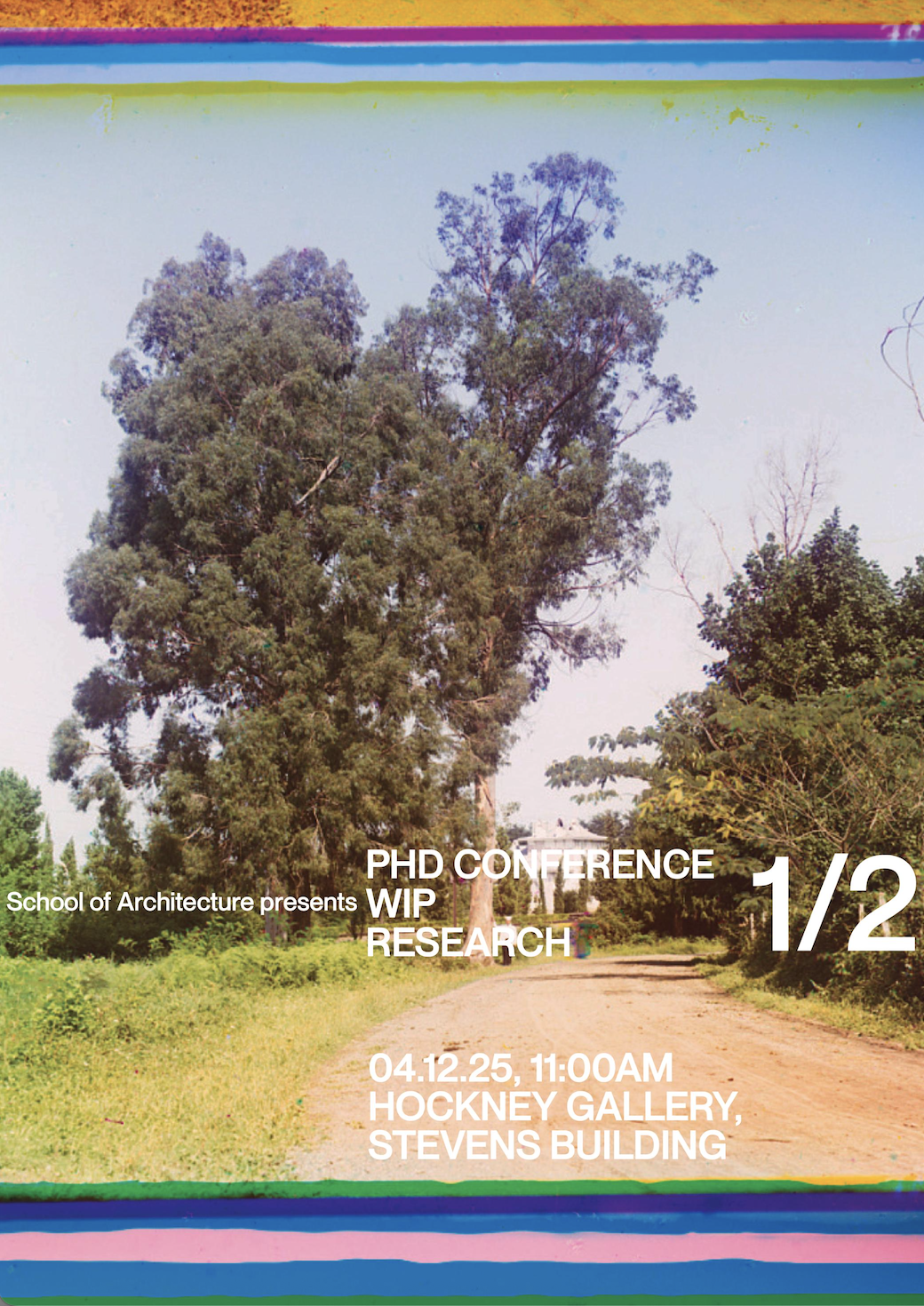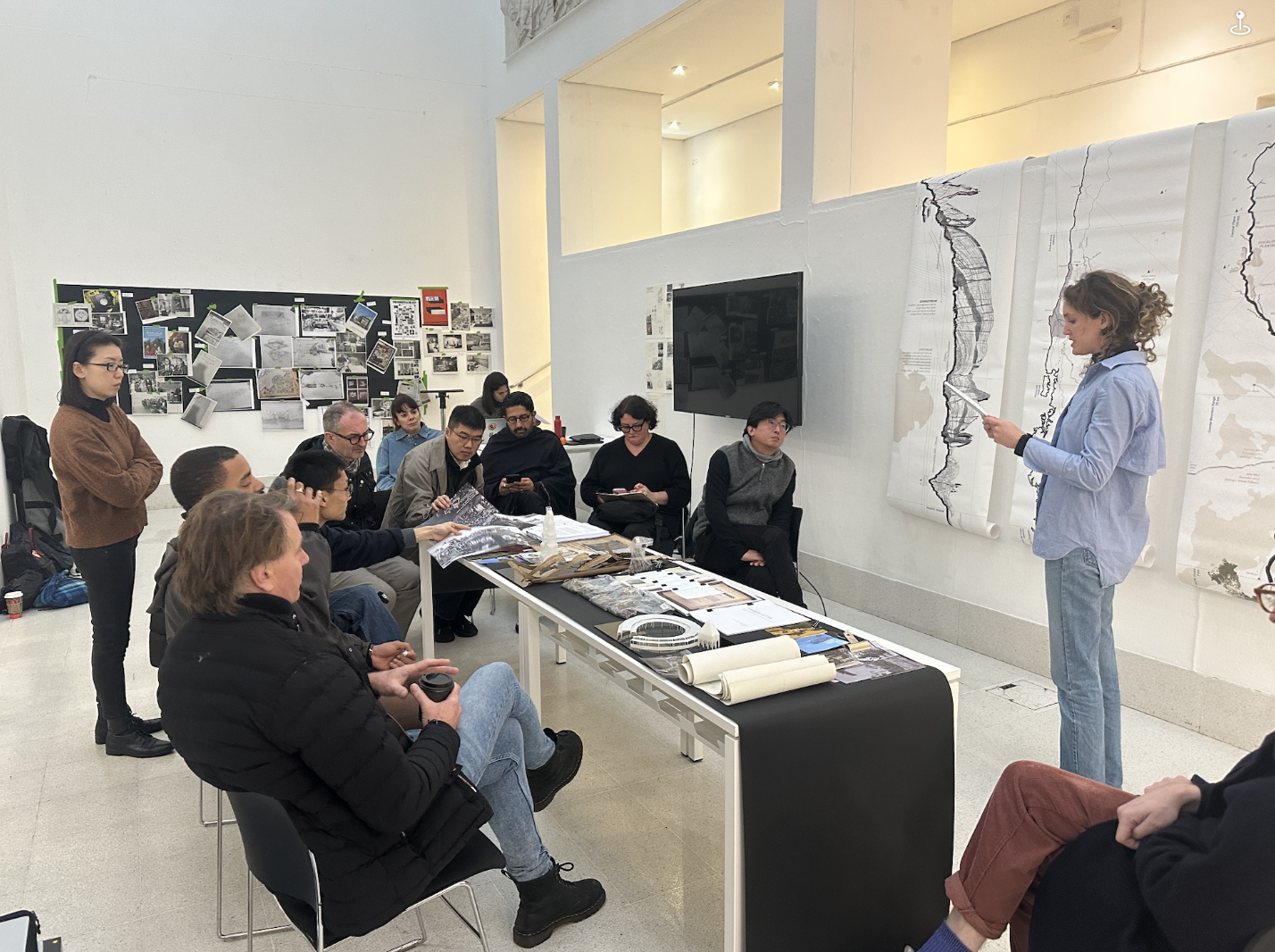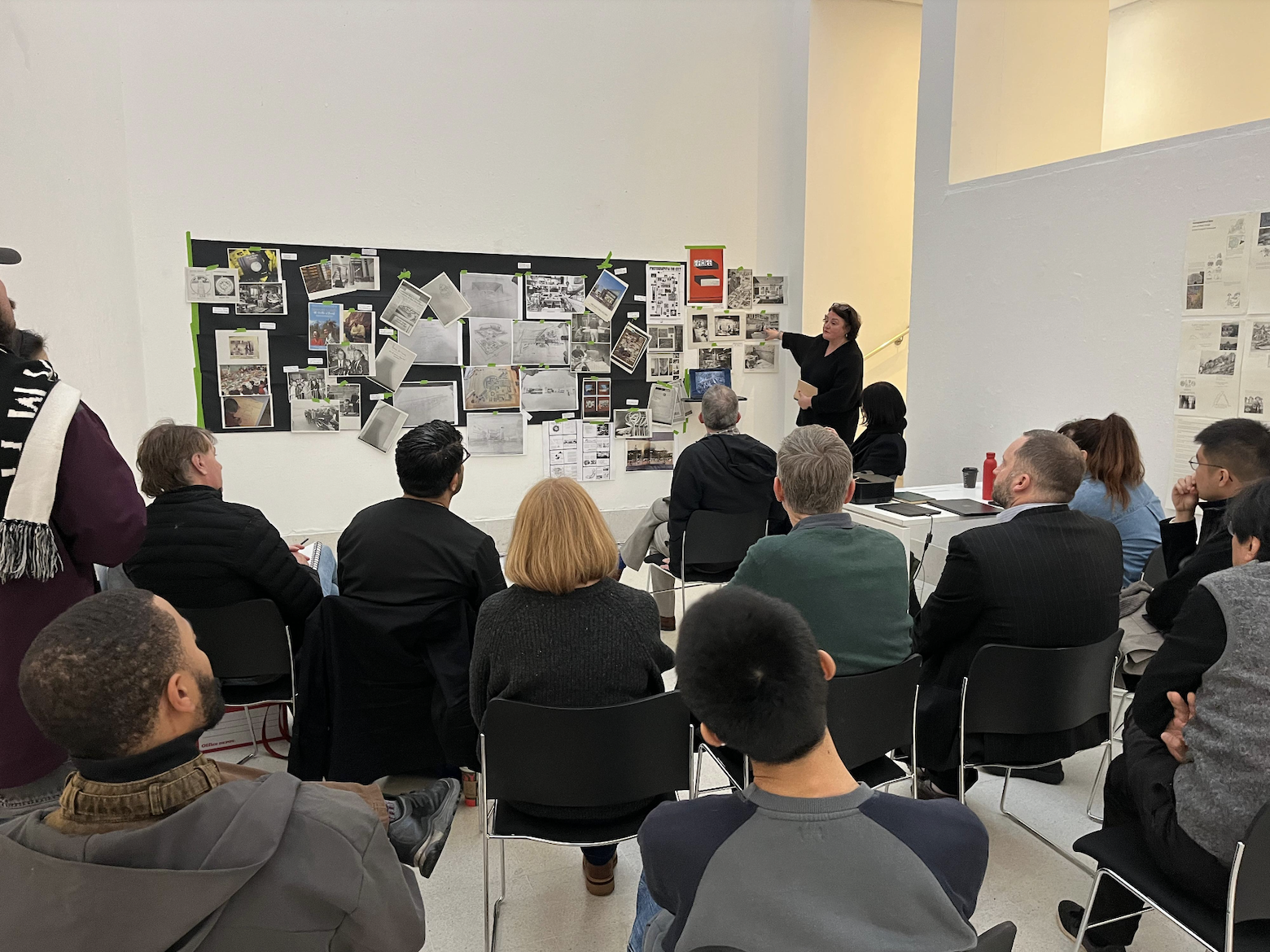
This series brings together guest speakers, RCA research staff and PhD students to present their work and research in progress. These events are open to all students and researchers at the RCA. Guests and candidates interested in the PhD Programme are warmly invited to join. For details or questions please contact Ines Weizman, Head of the Architecture PhD Programme.
The conferences will take place in the Hockney Gallery, Stevens Building on Kensington Campus.
Invited critics will be Ellis Woodman - Director of Architecture Foundation and Guillermo S. Arsuaga - Architect and Researcher at Princeton University as well as RCA research staff and supervisors.

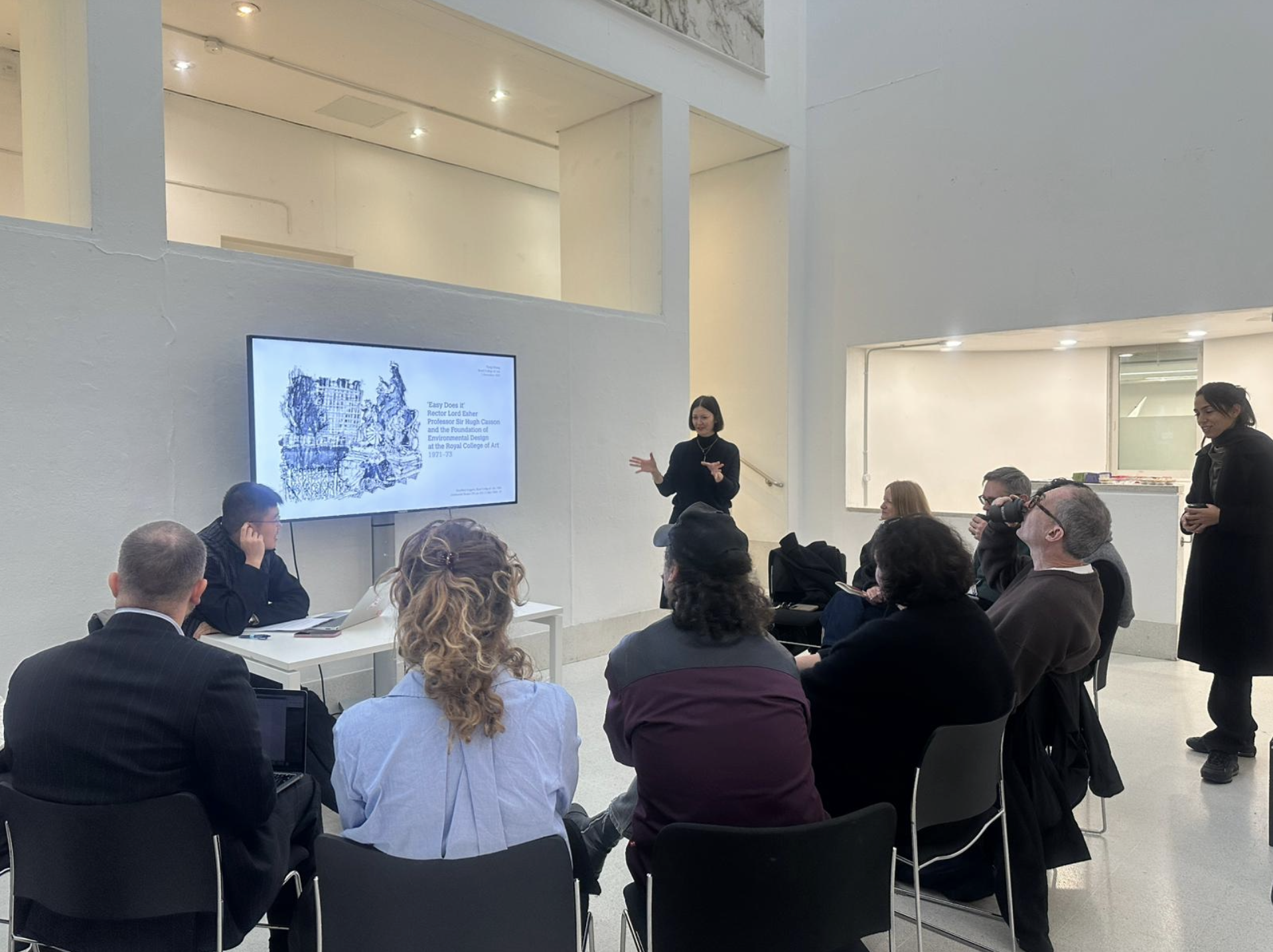
In March 1973, the architect-planner and Rector of the Royal College of Art, Lord Esher recounted his first eighteen months at the College. In a speech given to the Royal Society of Arts titled ‘Easy Does It’, he pointed at the uncertain future of the College and broadly British art and design education, remarking art’s turn from ‘service to society’ to ‘personal expression’ and projecting design’s return to a practice of ‘anonymous designers’.
Esher believed that he was selected by his predecessor Robin Darwin (Rector, 1948-71) at the College to address these emerging conditions, thereby preparing the College both financially and intellectually for the future. Nevertheless, his foremost venture to create an RIBA-chartered School of Architecture was met with reluctance among senior College members. The latter group included the then Professor of Interior Design, Sir Hugh Casson, who argued that his School’s distinctive intellectual diversity was a direct result of admitting students without prior architectural training.
This paper examines Esher’s stance on architectural education alongside the broad cultural and political conditions of the College, assessing how these factors shaped, or at times contradicted, the programme’s formative culmination in the founding of the School of Environmental Design in 1972, which positioned the College as one of the earliest respondents to architecture’s ‘built-environment turn’.

Charting possible environmental history readings of the Eames Office necessitates a mapping of the projects, protagonists and ideological currents of the period. In the tradition of Eames Office research methods this presentation will provide a visual diagram of the connections and ideas at play in the work of Charles and Ray Eames in the late 1960s and early 70s, centring on the unrealised National Fisheries Centre and Aquarium project (1966-1969) developed in collaboration with Kevin Roche John Dinkeloo & Associates. Drawing on recent archival research, the presentation will set out the nuanced intellectual and cultural landscape within which such projects were conceived and from which my ‘Eames Ecology’ analysis will develop.

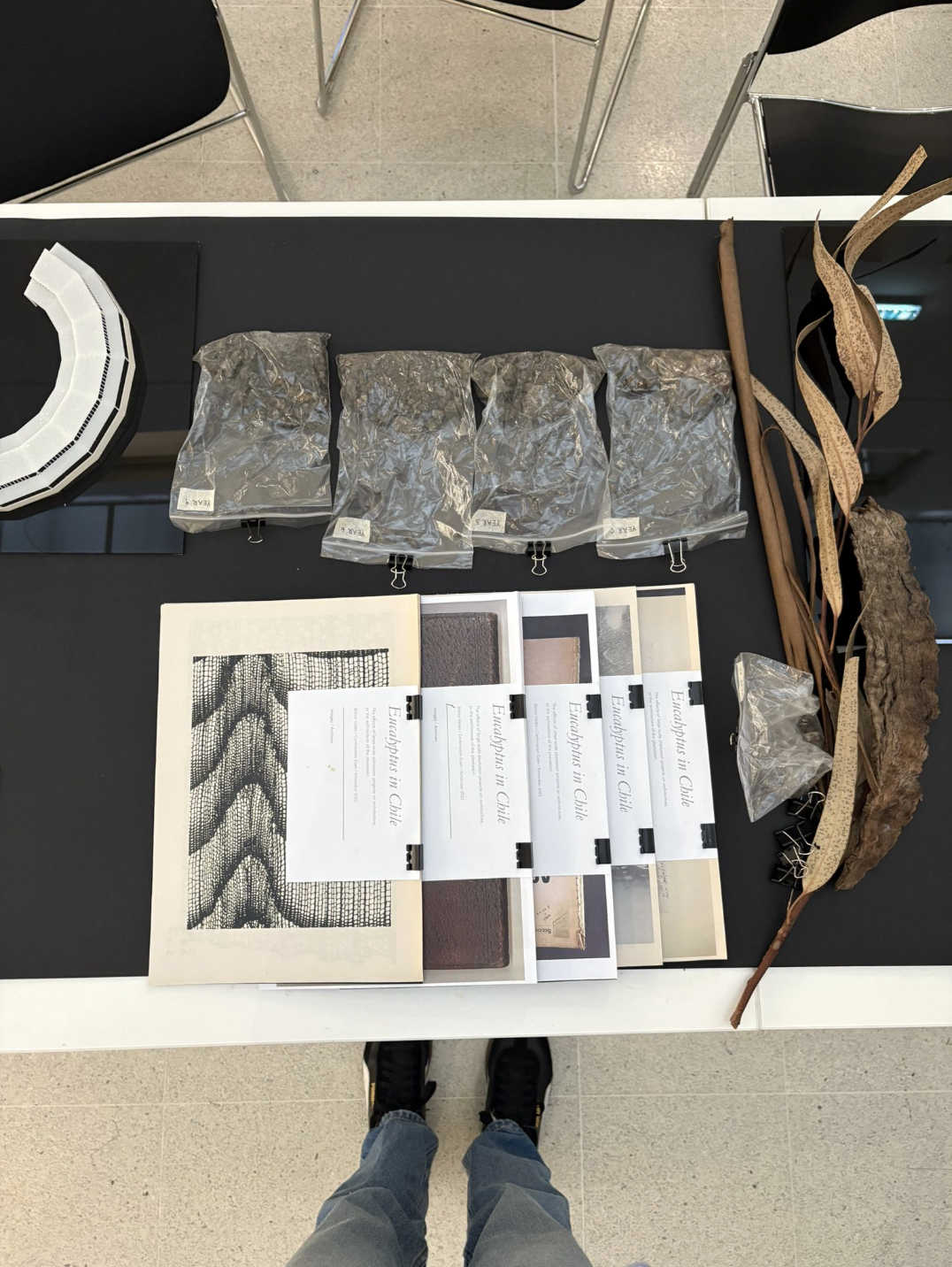
The paper mill in Lota held a central position in the political and industrial landscape of Chile under the military dictatorship of Augusto Pinochet (1973–1990). As a major producer of newsprint, it provided the material basis for state-sanctioned journalism that advanced the regime’s ideological agenda and curtailed political opposition. The mill was also a site of direct repression: longstanding unions were dismantled, and nineteen workers accused of left-wing affiliations were killed. Lota thus mirrored national patterns of surveillance, intimidation, and the systematic destruction of organised labour.
Architecturally, the mill’s most notable feature—the red cross on a yellow tower—asserted the dominance of state and corporate authority across the Biobío River’s horizon. As part of a wider industrial landscape, the mill materialised the dictatorship’s fusion of neoliberal economic restructuring with propaganda and coercive control.
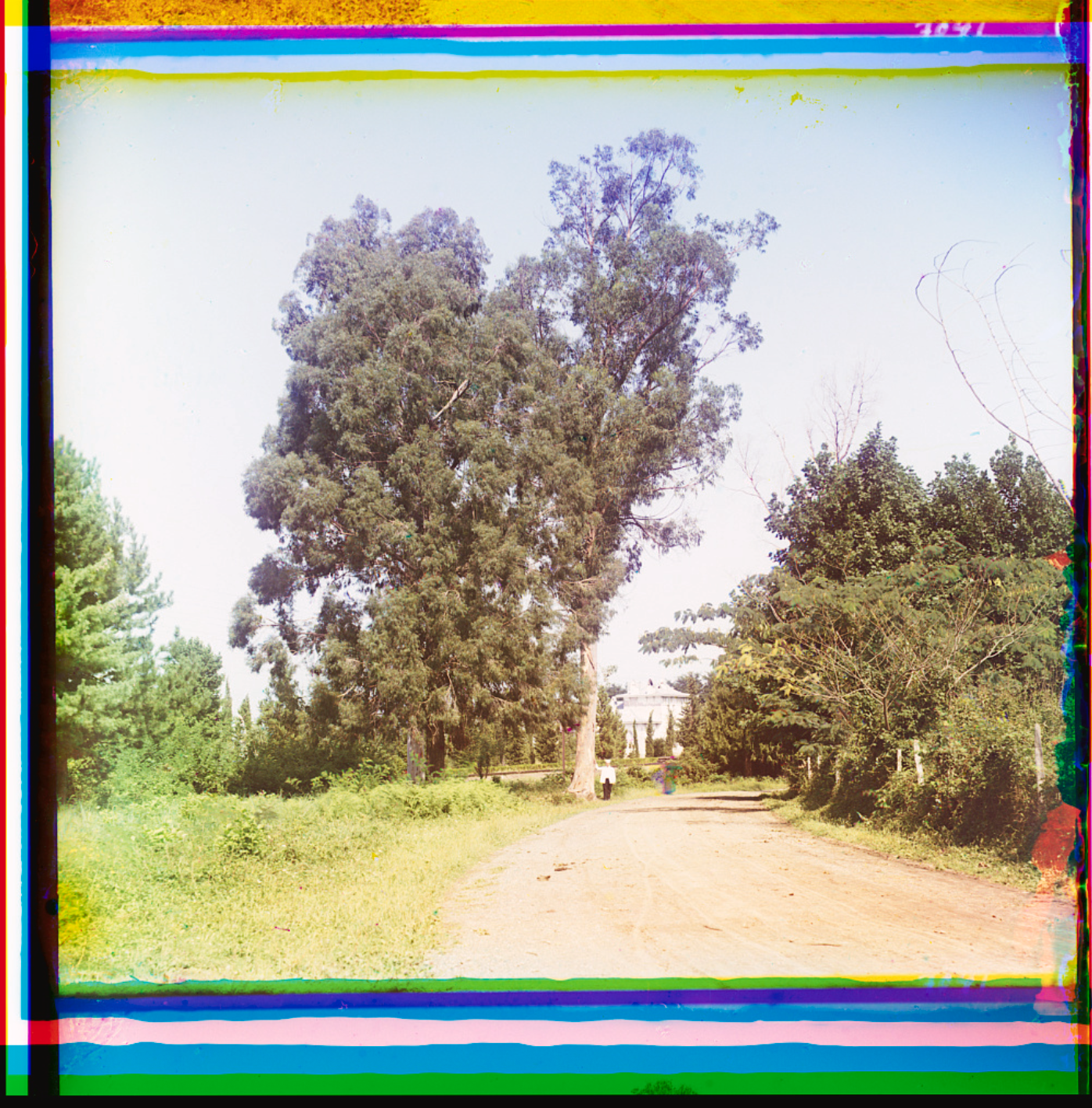
This paper analyses how paper production and the rapid expansion of eucalyptus plantations became entwined with the regime’s repressive strategies. Plantation growth, driven by export-oriented reforms, advanced unchecked due to the suppression of environmental and labour activism. The resulting plantation grid, optimised for yield and shaped by imported technologies, demonstrates how economic imperatives and authoritarian governance operated in tandem during the Pinochet era.

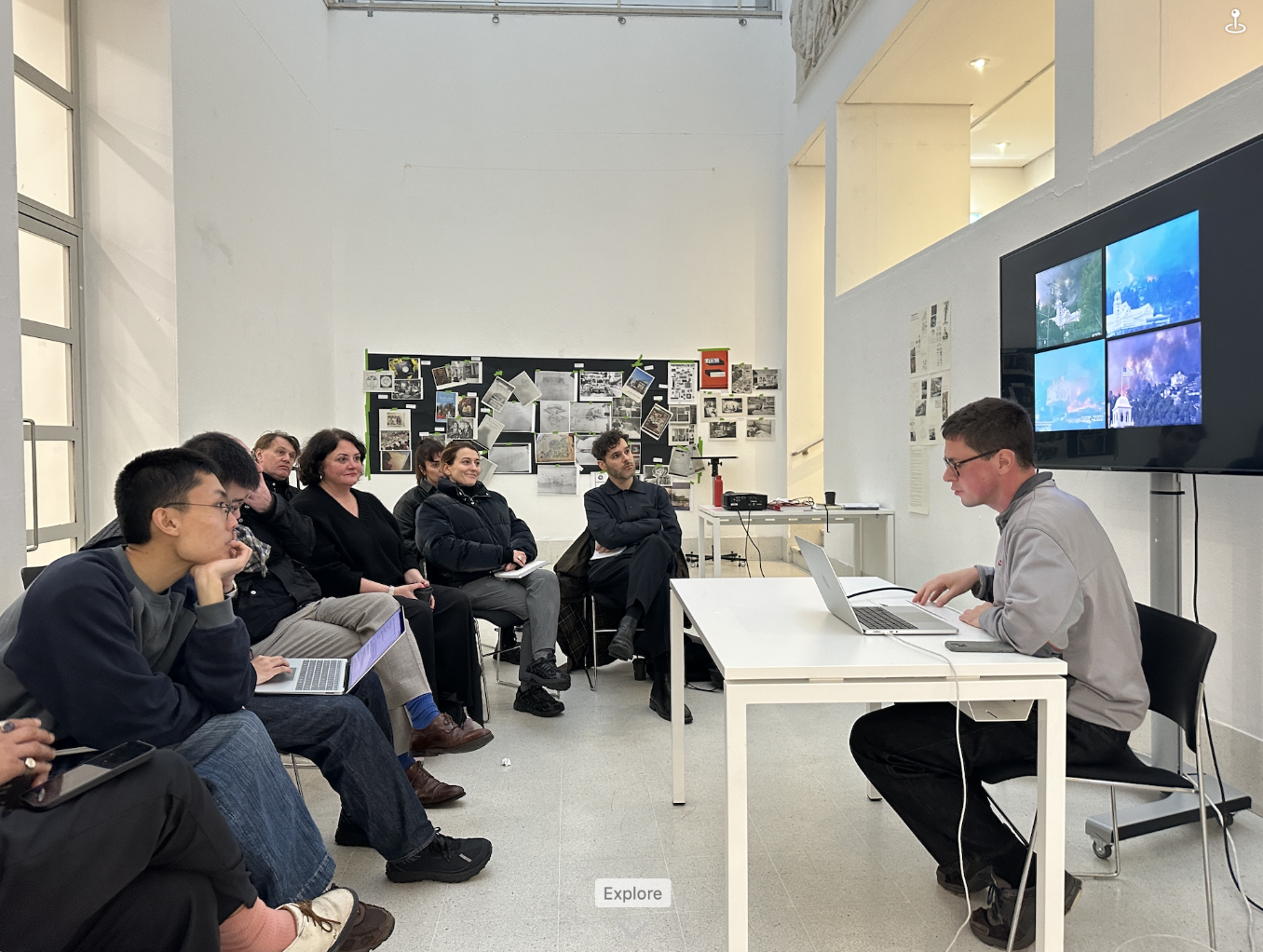
A promotional video for Oakland’s KTVU 10 O'Clock News in 1990 closes with the sign-off “Anything Later is History”. In one shot of the trailer, showing the frenetic inner workings of the TV newsroom, a hand is seen inserting a video cassette labelled ‘FIRE’ into a VCR.
During the height of local television news, dramatic images of fire, accidents, and crime dominated broadcasts because the medium was uniquely suited to depicting them. On October 20th, 1990, one year after the prophetic playback of the prop video cassette, the Oakland Hills Firestorm ignited. This event would unfold to become perhaps the most significant urban wildfire in United States history, not only in terms of the damage and cost inflicted, but also in its influence on a new emerging visual language which sought to communicate the dangers of living in what has become known as the wildland–urban interface.
This presentation will introduce new research into, and analysis of, the live television broadcasting of this event by examining how Bay Area stations chaotically, but spectacularly covered it for viewers across the nation. Centering on how news cameras remained transfixed on the fate of Oakland’s Claremont Hotel throughout the duration of the broadcast, this reading will explore how the mediation of the visible register of fire, set against landmark works of architecture can be emblematic of the broader anxieties surrounding hillside settlement by the Bay Area’s wealthy, literary, and artistic elite.

This talk offers a spatial enquiry into the conception of the military mock-city as an adaptative environment, an assemblage of spatial responses to the transforming logics of urban warfare. Baladia is a mock Palestinian city built by the US and Israeli military in the Negev desert to rehearse and fine-tune warfare tactics. The layout of Baladia, reconstructed from aerial photographs and found footage collected from various social media platforms, uncannily mirrors the historical plans of Arabo-Islamic cities as conceived by European urban scholars, architectural and urban history accounts of the late 1990s.
My objective is to map the pathways of direct knowledge transfer and institutional exchange, demonstrating how academic research generated operational insights that could be leveraged for military purposes. I will further unpack the military’s pursuit of spatial and cultural authenticity leading to the construction of a reality inside the simulated site highlighting how US and Israeli operational logics continuously adapt and respond to the evolving forms of resistance on the ground. From Jenin to Baghdad and back, the military and its allies exchange notes, theories on the structure of the Arabo-Islamic city inform military strategy and mock-sites are revisited. This presentation positions the architectural plan as the central methodological lens through which we traverse history and space to build a relation between the dystopian mock-city and city planning.

This presentation explores how Italy's prolonged and complex waste crisis, coupled with the marginalisation of impacted communities, has led to the emergence of resilient urban commons that actively advocate for environmental justice while restoring territorial metabolism.
Drawing on the environmental knowledge and spatial reclamation tactics developed by back-to-the-land movements in the Campania region, the research argues that the current ecological crisis is not just the result of a technological failure. It therefore critically examines the spatial conditions and planning policies that perpetuate systems of inequality, particularly through the creation of 'wasted geographies'.
This presentation will introduce an analysis of the region's current status, such as contaminated sites, and consider the recent judgment of the European Court of Human Rights on the case of Cannavacciuolo and others. It will also include a mapping of land practices, such as food cooperatives like Selva Lacadona and socio-agricultural commons like Masseria Antonio Esposito Ferraioli, which are active in land regeneration as well as the development of alternative land and environmental stewardship protocols.

With the rise of generative artificial intelligence (AI) from images, video, music and writing, the dependency on AI responses and prompts has developed what is called ‘AI hallucinations,’ where Large Language Models (LLMs) actively generate misinformation and accreditation to imaginary sources when data is unknown. Similarly, the phenomenon of the ‘technological haunt’ of artificial intelligence presents the permanence of our digital footprint to resurface and impact both personal recollections and collective memory. From the lens of archaeological history, digital haunting has the power to reinforce pre-existing colonial, sexist and racial biases, trapping our digital territory in a zone of recolonization, further propelling our distrust in these systems. As more generative AI media infiltrates our historic sources, it is urgent to identify the current stakes of AI use in academic media, and to acknowledge the dangers, misinformation and offer potentially productive research outcomes that can be enacted by using these systems critically and ethically.
This discourse will be compared to the prophetic artefact and fantastical imaginary, where the artefact becomes embedded with fictionalised and hallucinated writing and history. Positioning the widely discussed and debated Villa of Mysteries as a site for investigation, I will examine various artefacts and assemblages of film and art that expand the narrative fiction of the Villa, from Freudian psychoanalytic interpretation, prophetic meaning found in Etruscan mirrors, mimicked iconography in other ancient artefacts from Hellenistic and Greek origin, and repeated imagery in contemporary iterations of the fresco. This paper will examine the increasingly dangerous methods of surveillance, identity capture and dialectic influence of rising AI hallucinations and hauntings while driving a comparison to the contested archaeological history of the Dionysian mystery frieze of Pompeii to propose alternative methods of AI tool use for a productive learning and reframing of history.
The Programme's Elevator Pitch!
Please view the programme's elevator pitch for an overview.
General Information
Please find information on the programme curriculum, application rounds and fees.
Apply
Please consult the Royal College of Art's application portal:
Postgraduate Research (PGR) Programme